
Never spend an hour on meeting minutes again
The method and the prompt that turn fifty minutes of writing into fifteen minutes of review.
Today's topic is, much to my surprise, one of the ones you've asked about most: how to write meeting minutes with AI.
Surprising, because it's a deeply unglamorous use case. But on reflection, it makes perfect sense: everyone spends time on it, nobody likes doing it, and the payoff is immediate.
So today I'm keeping it simple. I'm giving you a copy-paste prompt that works in any chatbot (ChatGPT, Claude, Gemini) and turns a raw meeting transcript into clean, structured minutes. Plus the three tools to pair it with, depending on your situation. That's it.
In 2026, what used to take an hour can take five minutes. Not an overblown promise: Transcription has crossed a threshold, even in French (92 to 98% accuracy, versus 65 to 75% three years ago), and models can now structure minutes straight from a raw transcript, no hand-holding needed.
The question to ask isn't "which tool?" but "which scenario?", and that's what we'll walk through right now, as simply as possible.
But first: a word for those who want to go further
Every Sunday, I send a denser private report, The Ergon Report, to people who can't afford to miss the shift coming over the next 18 months.
Yesterday I was looking at who's been reading it since launch. No surprise: business leaders in French-speaking Switzerland, town clerks in Swiss municipalities, law firm partners, CFOs, entrepreneurs. People with decisions to make and no time to test twenty tools a week themselves.
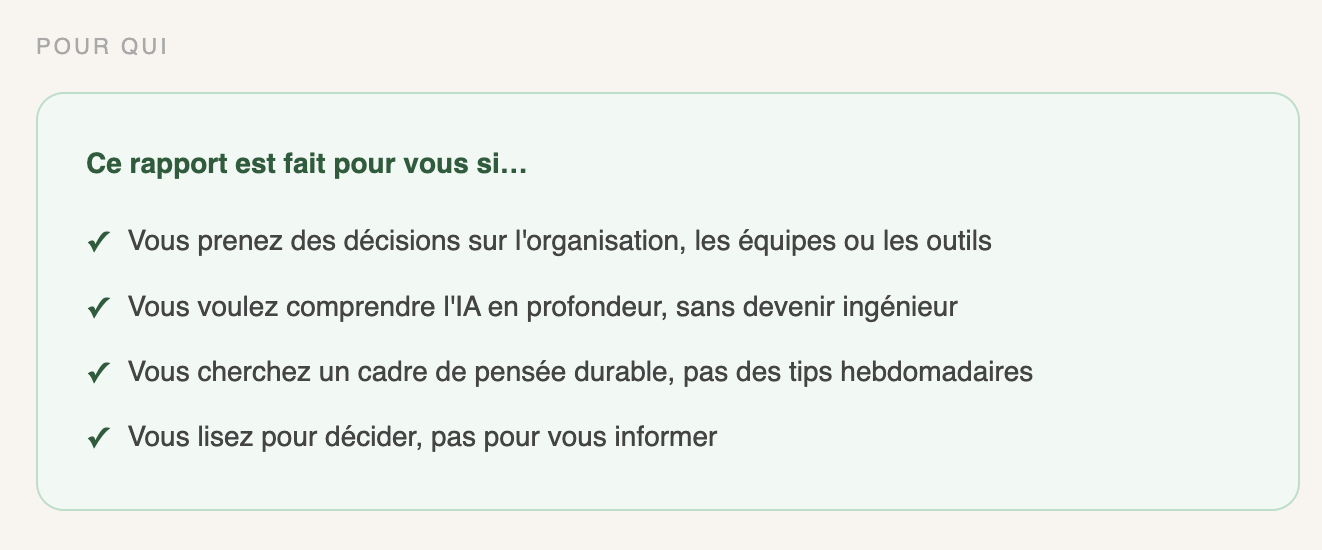
Each issue contains a thesis, concrete cases, a ready-to-use tool (prompt, Claude Skill, cheatsheet), and soon, the Ergon AI.
Three scenarios, three solutions
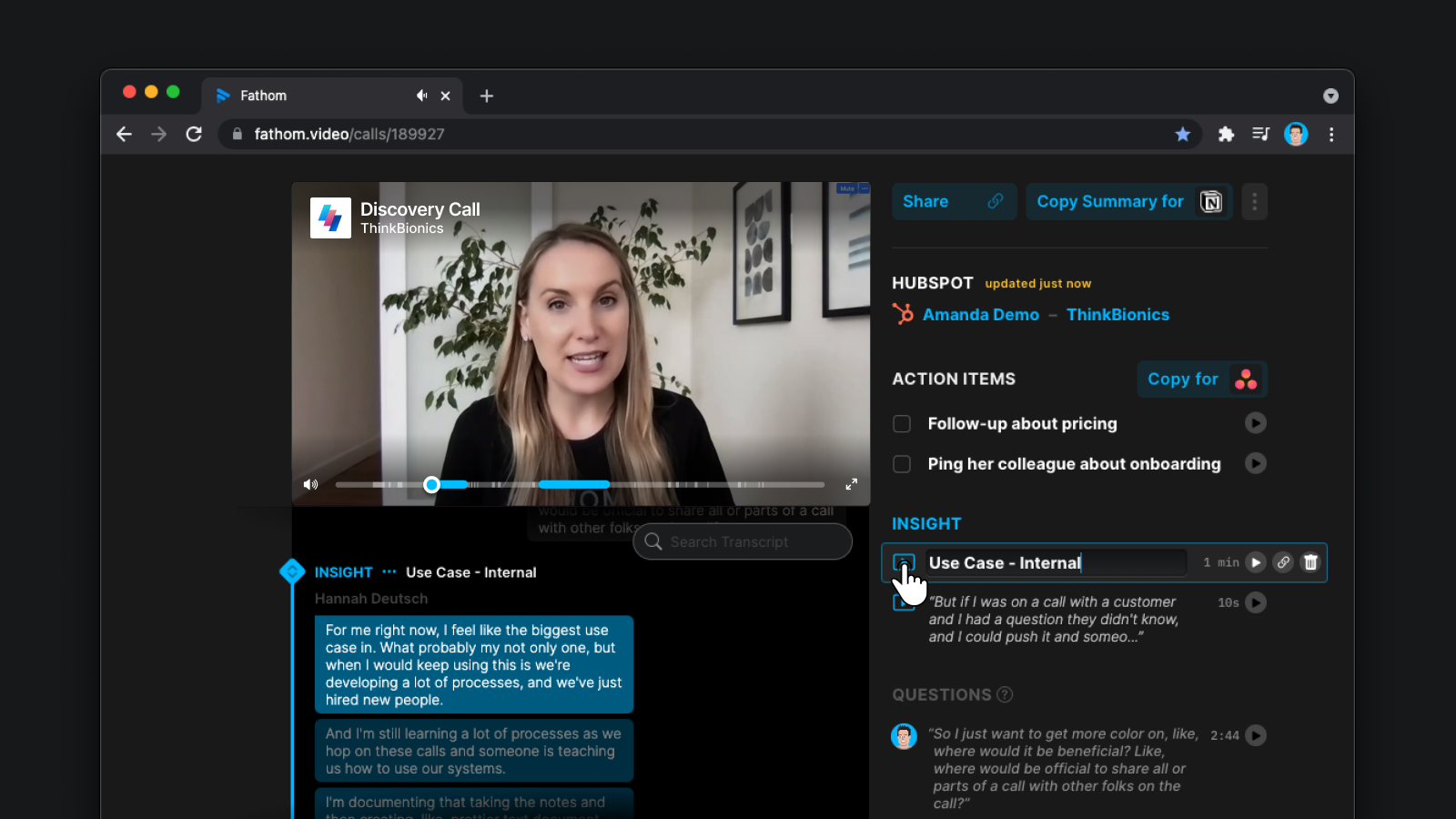
If your meeting is on video (Zoom, Google Meet, Teams), the simplest tool in 2026 is Fathom. The bot joins the meeting, records, transcribes, and produces the minutes a few minutes after it ends. The free plan is unlimited, with no monthly cap. The only downside: a bot visible in the participant list, which can be awkward in some sensitive settings. For those cases, there's Granola, which listens in the background without joining the meeting (Mac, Windows, iPhone). Twenty-five free meetings a month, then $18 a month.
If your meeting is in person (committee session, foundation board, nonprofit annual general meeting), the universal method is simpler than you'd think. You record with your phone's voice recorder, once participants have agreed. You upload the audio file to ChatGPT, Claude or Gemini. You run the prompt below. The minutes are ready.
If you handle confidential matters (HR, legal, strategy), go with a tool hosted in Europe: Leexi (Belgium, handles Swiss German well), Dicte AI (France, European models), or MeetGeek with EU storage. Avoid the free versions of ChatGPT for highly sensitive content, since what you share may be used to train the models.
The copy-paste prompt
Save it once in Claude (Project), ChatGPT (custom GPT) or Gemini (Gem), and you'll have it for life.
## Role
Meeting secretary.

## Context
The transcript below comes from a recorded meeting.
It probably contains hesitations, repetitions and
people talking over each other. Your job is to turn it into clean,
structured, faithful minutes, in English.

## Transcript
[PASTE THE TRANSCRIPT HERE]

## Output format

# Meeting minutes

### Header
- Type of meeting
- Date (if mentioned in the transcript)
- Identified participants (first names or roles)

### Agenda
Numbered list of the topics actually discussed, in the order
they came up.

### Discussions and decisions
For each topic:
**Topic**: short title
**Discussion**: positions expressed, and who held them
**Decision**: clear outcome, or "no decision made"
where applicable
**Actions**: task, owner, deadline

### Open items
Topics raised but not settled, to carry over to the next meeting.

### Other business
Items mentioned briefly, outside the agenda.

## Rules
1. Stay faithful to the transcript. If information is missing
   or ambiguous, write "to be clarified".
2. Quote verbatim only what is binding:
   figures, dates, amounts, formal decisions.
3. Rephrase everything else neutrally, in the present or
   past tense.
4. Identify people by first name or role.
5. Never use em dashes or en dashes.
This prompt does 80% of the work. The remaining 20% is up to you: fine-tuning it to your taste, and your final read-through, which takes fifteen minutes instead of an hour!
The precaution you can't skip
In Switzerland, the revised Federal Act on Data Protection (nFADP) requires explicit consent from participants before recording. The rule is simple: you mention it at the start of the meeting, you record the agreement in the minutes, and you offer everyone the chance to review their contribution before the minutes go out. It's more than a formality: it's what separates a solid practice from a legally shaky one.
For this week
Pick an upcoming meeting, ideally one with moderate stakes (a team check-in, a nonprofit committee). Test the workflow end to end. Compare the generated minutes with the ones you would have written. In a single session, you'll see what you gain, and where to refine your prompt so it matches your style.
❝
What really changes isn't the time you save. It's being able to be fully present in the meeting, knowing nothing important will get lost.
Talk soon,
Salim, from GenevIA
In Geneva
P.S. Thank you for your trust and your amazing feedback. I really do read it all, and I reply to as many of you as I can!
Get The Ergon Brief every week