
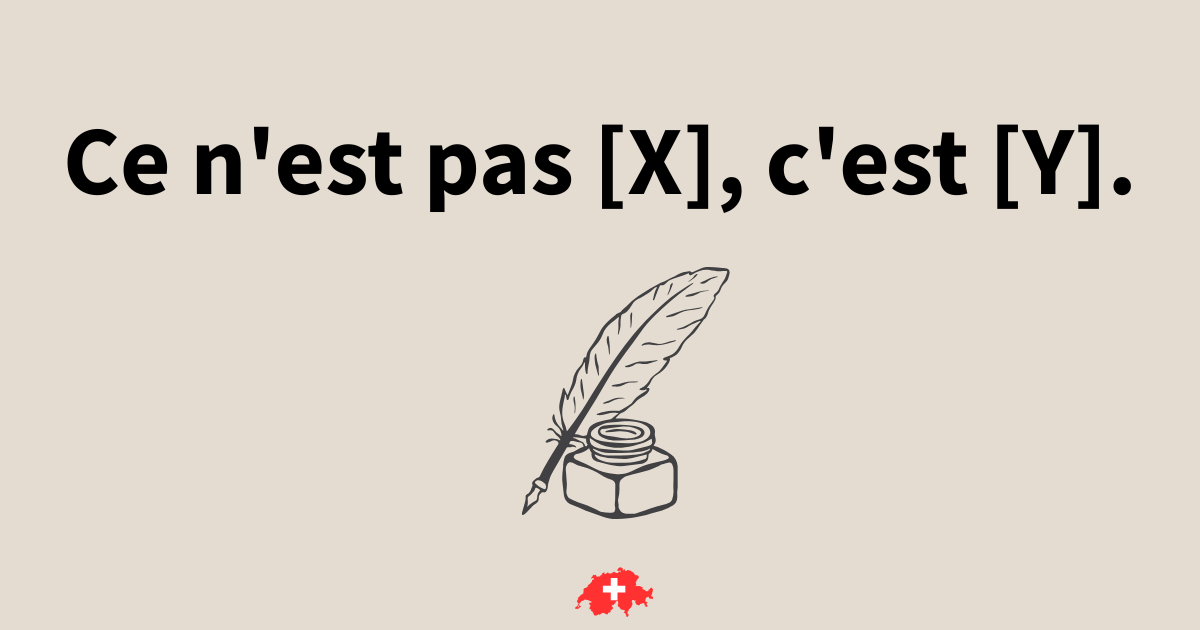
It's not [X], it's [Y].
You sound like an AI. Stop using this phrase right now.
If you use this pattern, I know instantly that you're using AI.
And so does everyone else, by the way.
"It's not [X], it's [Y]."
Negative parallelism. Ban it. Burn it.
Every LLM writes it. Way too many times per answer.
Barron's just counted how often it shows up in Fortune 500 annual reports: 50 times in 2023, more than 200 in 2025. That's a fourfold jump in two years. Haha.
And even the best fall for it: Microsoft, McKinsey, Cisco, Accenture, all caught red-handed this month.
The fix takes 30 seconds.
Copy the prompt below and paste it into your Claude system instructions.
What's in the prompt
It replaces every "don't sound like an AI" you've pasted into your prompts over the last two years.
It contains:
The banned sentence patterns (negative parallelism and its 15 disguises)
The banned vocabulary (100+ AI words: "leverage", "catalyst", "holistic", "innovate", "optimize"...)
The rhythm rules (short paragraphs, varied sentence length, zero em dashes)
An anti-overcorrection guide so Claude doesn't swing too far the other way.
Paste this into your system instructions:
# WRITING RULES

Read this before you write anything for me.

Goal: write with context, taste, and a reason to speak.
Apply with judgment. The spirit matters more than the letter.

## Default voice
Write directly, precisely, naturally.
Start with the useful answer.
Short paragraphs. 1 or 2 sentences by default.
Vary the rhythm. Short sentence. Then a longer one.
Active voice.
Be specific: numbers, names, concrete examples, real constraints.
Once the point is made, stop.

## Banned words
leverage, catalyst, holistic, innovate, optimize, boost,
crucial, essential, pioneering, transform, revolutionize,
lever, synergy, disruptive, seamless, robust, scalable,
transparency, visionary, accelerate, reinvent, unprecedented

## Banned sentence shapes
- "It's not X. It's Y." and all its variants
- "Not X, but Y."
- "Forget X. Think Y."
- "Less X, more Y."
- "The real question isn't X, it's Y."
- "Most people think X. In reality, Y."
- "On the surface X. In reality Y."

When you find one of these patterns: delete the first half,
state the claim directly.

## Banned transitions
Moreover / Furthermore / In addition / It is worth noting /
It is important to emphasize / That being said / With this in mind

## Banned openings
"In today's world..." / "In the digital age..." /
"As AI transforms..." / "It's important to note..."

## Formatting
No em dashes. Use periods, commas, colons.
Bold sparingly. 1 or 2 times per section at most.
Headings in sentence case.
Lists only when scanning makes sense.
Paste it once. From then on, everything Claude writes for you gets checked against it automatically.
One last thing: read the prompt carefully before you paste it.
Because once you've read the list of banned patterns, you'll start seeing them everywhere. In your contacts' LinkedIn posts. In the newsletters you subscribe to. In press releases. In your suppliers' emails.
You'll never read a piece of text the same way again.
Sorry about that 😅
Talk soon,
Salim, from GenevIA
In Geneva
For those who want to go further
The Ergon Report is the premium newsletter, spun off from GenevIA, written for leaders and professionals who don't want to sit out AI and want to make the right calls over the next 18 months. One thesis per issue. Concrete cases. A lens to see clearly and go further. A usable tool (ready-to-use prompts, Claude Skills, cheatsheets…) every week.
And if you want this analysis, plus a concrete tool you can actually use (ready-to-use prompts, Claude Skills, cheatsheets…), landing in your inbox every week, so you don't miss the next time Stanford, PwC or McKinsey drops a number that changes how we read the decade, join now.
Get The Ergon Brief every week