
How AI makes some people smarter
The story that changes how you see AI.
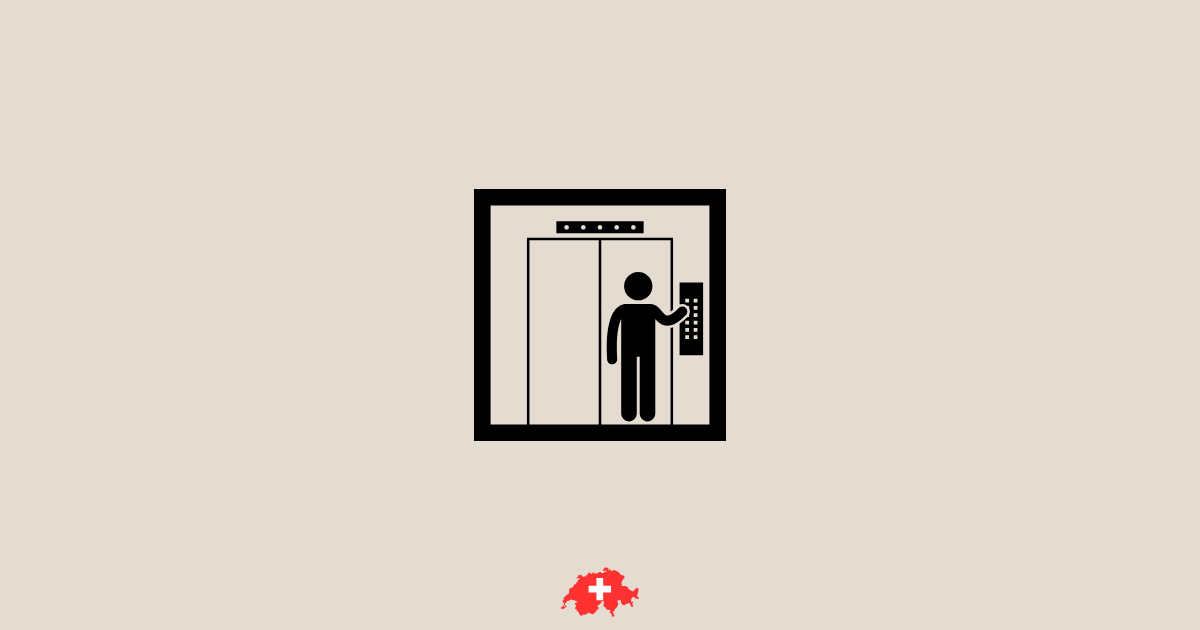
Here's a short story. It tells you almost everything you need to understand about artificial intelligence in 2026.
A few years ago, the owner of a large building has a big problem.
His tenants are complaining about the elevator. Too slow. The wait is unbearable. Some are threatening to leave.
So he calls in engineers. Their answer: to speed up the elevator, you'd have to replace the motor, maybe rebuild the shaft. Months of work. A fortune. And even then, you'd barely save a few seconds.
The owner is stuck. There seems to be no way out of the question: how do you make this elevator faster?
And then someone asks a different question.
Not "how do we make it faster." But "why is the wait unbearable?"
The answer changes everything. People aren't suffering from the slowness. They're suffering from boredom. From those empty seconds, staring at a door, with nothing to do.
So he installs mirrors next to the elevators.
People look at themselves. Fix their tie. Discreetly check out everyone else. The complaints stop dead.
The elevator is just as slow. Exactly as slow as before. Nobody touched the motor. They just understood that the problem was never the speed.
Keep this story in mind, because it says something huge about the era we're entering.
We think intelligence means finding the right answer. For a long time, that was true. Whoever had the answers had the edge.
But today, answers are free. You ask, the AI answers, on just about anything, in seconds. The answer itself isn't worth as much anymore, because it's within everyone's reach.
What's valuable now is the question.
And here's the catch, the one almost nobody sees:
Give the AI the question "how do I make this elevator faster," and it will give you a beautiful answer.
Motors, pulleys, calculations.
A perfect answer to the wrong question.
That's why AI doesn't make everyone smarter.
Without the ability to see the real problem, it isn't much use. It answers fast, and misses the point.
But in the hands of someone who can see clearly, it becomes an amplifier. It multiplies the few who ask the right question. They pull ahead, and the others won't catch up.
The good news is that this can be learned. Seeing the real problem beneath the one you think you have is probably one of the most important skills of a lifetime. It was already true before AI. Today, it decides almost everything.
We've only scratched the surface here, so for those who want to go further:
This week in The Ergon Report, we go deep. How to recognize the real problem beneath the one you think you have. Why it's so hard to do for yourself. And above all, there's a specific way to use AI, not to get answers, but to help you see your real problem. We'll look at exactly how.
And good news: you can now read the Ergon Report free for 30 days. Four full issues, without paying a thing. Stop whenever you like.
The Ergon Report: 30 days free
(The link takes you to the sign-up page. Just follow the steps as usual: the one-month trial applies automatically, and you pay nothing today.)
Talk soon, Salim
Get The Ergon Brief every week