
AI will make you work more, not less
AI has never reduced anyone's workload. Here's why.
Hi,
Before I tell you this story, let me ask you something straight out.
How many hours did AI save you this week?
Two? Five? Ten?
Now the real question, the one that actually matters: where did they go?
If you don't have a precise answer, chances are you're losing them. Not tomorrow.
Right now, while you're reading this. I don't have a magic formula for you on this, but I have a question for you at the end that's worth sitting with. First, I need to tell you what happened to a friend of mine.
He builds custom solutions for companies. Products he creates from scratch, client by client.
A few weeks ago, he tells me: "I've automated a good chunk of my work with AI."
I'm expecting the obvious next line. More free time. Shorter days. Finally some breathing room.
He says: "Actually, no. I'm working almost as much as before."
He thought it was just him. Disorganized, or not using the right tool yet.
That's not it. And what's happening to him explains why it's happening to almost everyone using AI right now. Very likely including you.
Here's the exact mechanism.
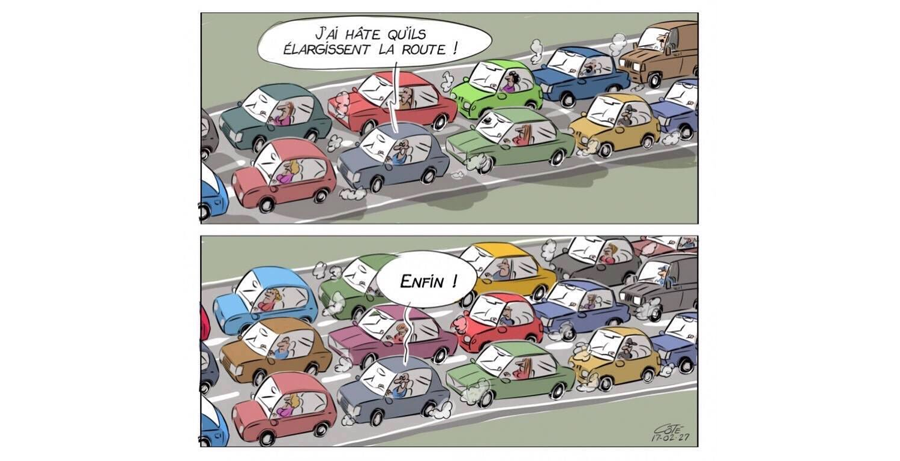
In 1865, an English economist, William Stanley Jevons, noticed something strange. The steam engine had just become far more efficient. Logically, England should have been burning less coal.
It burned more.
Because cheaper energy opens up uses that simply weren't worth it before. You don't do the same thing faster. You do more things, period.
That's the Jevons paradox. And two studies published this year confirm it applies precisely to what my friend is going through.
Researchers at Berkeley Haas followed 200 tech employees for eight months. The result, published in Harvard Business Review: AI didn't reduce their workload, it intensified it. They moved faster, expanded their scope, and ended up working more hours, not fewer.
Another study, at ActivTrak, analyzed 443 million hours of work across more than 1,100 companies. AI adoption went from 53% to 80% in two years. And productive hours rose by 5%, even as the workday got 2% shorter.
The time saved is almost never given back to people. It's absorbed, almost automatically, by more work.
Now, there's something else to understand, and it may be the most important part.
Everyone keeps saying AI will replace tasks, jobs, sometimes entire professions. That's partly true. But if you look at the history of work over two centuries, one pattern keeps coming back: humans have never ended up working less thanks to a more efficient tool. They've ended up producing more, in the same hours, or longer ones.
When the spreadsheet arrived in the 80s, everyone predicted the end of accountants.
Their numbers quadrupled in the decades that followed, because financial analysis, now cheaper, simply got done more often, on more topics.
The role didn't disappear. It moved.
So yes, part of your current work is going to be replaced by AI. But what replaces that work is almost never rest. It's other work, which takes up the same space. The real question for you as a professional isn't "will AI replace me?" It's "what will that time be replaced with, and do I get a say in it?"
I promised you a question at the end. Here it is, as a prompt in case you want to make it your own. Not a magic formula, just a way to keep the time you save from vanishing without a second thought.
(fighting fire with fire, haha)
This week, AI saved me time on: [list what you delegated]. Without telling me what to do, help me think through three things: what did I do with that time without even thinking about it? If I had to consciously choose where to invest it, what would that look like? And what might I be avoiding by simply letting my calendar fill itself up?
My friend has been asking himself this question for a few weeks now. I won't tell you it solved everything. But at least, for the first time, the time he saves isn't just swallowed up without him noticing.
Okay, I didn't give you a tool today, I gave you a question, and in the face of a change this big, I honestly believe the second is worth more than the first!
Talk soon, Salim
P.S. The Jevons paradox says something simple: throughout history, efficiency has never reduced work. It has always redirected it. The real question isn't "will AI save me time?" It's "where am I going to redirect it, deliberately?"
Get The Ergon Brief every week