
AI replaced 80% of my job. Here's what I did.
And the remaining 20% changed my career.
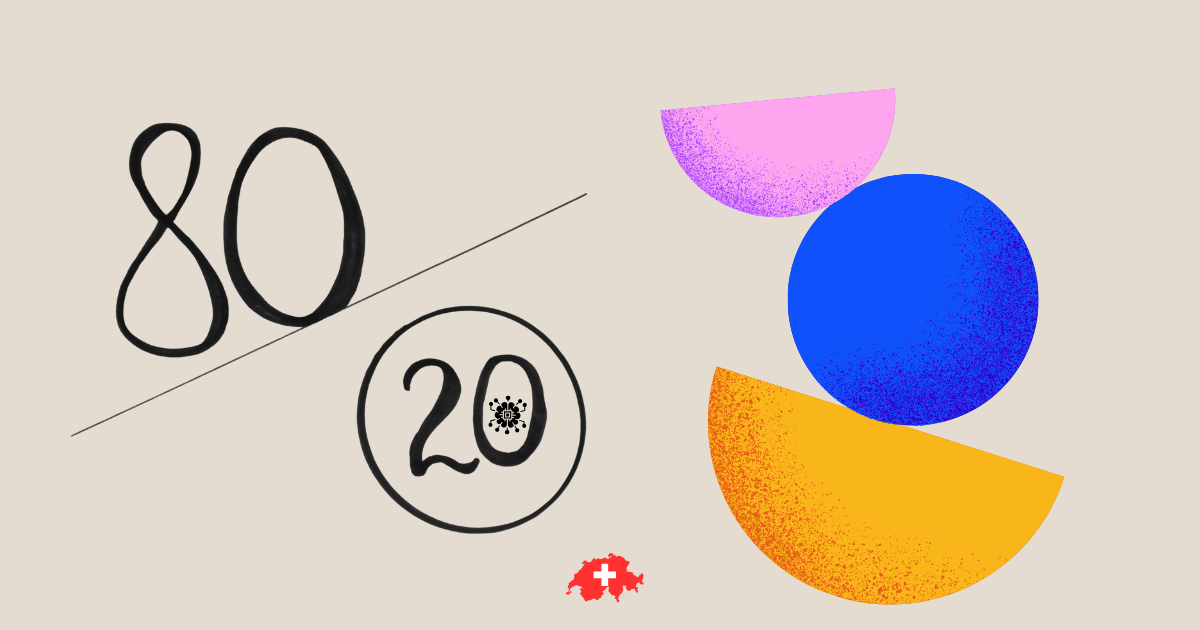
A lot of you reacted to my AI 80/20 concept.
For those who missed that episode:
the idea is that AI today can do 80% of the work in most jobs perfectly well. And that the real question, for each of us, is no longer "will AI affect my job?",
it's "what is MY 20%?".
The 20% AI can't do. The 20% where I need to become exceptional.
So here's an idea: a series where I take real jobs, one by one, and break down their 80/20. This is episode 1, and it's a test.
And whatever your job (accountant, salesperson, HR, designer or doctor), I think every case study will teach you something.
Because the logic is the same everywhere.
Let's start with mine: developer, AI engineer.
Quick note first: if you want an overview of how AI is reshaping company tech and IT management in 2026, this free guide is an excellent starting point:
The IT strategy every team needs for 2026
2026 will redefine IT as a strategic driver of global growth. Automation, AI-driven support, unified platforms, and zero-trust security are becoming standard, especially for distributed teams. This toolkit helps IT and HR leaders assess readiness, define goals, and build a scalable, audit-ready IT strategy for the year ahead. Learn what’s changing and how to prepare.
When ChatGPT came out, it was nice but sloppy. You'd ask it for code, and it would spit out something full of errors.
But even then, it was already a huge help.
Then the models got better. And recently, two tools changed everything:
Cursor, and then Claude Code.
The AI no longer hands you code in a chat. It's right inside your project, it sees your files, and it codes alongside you…
The result: 3-to-4-hour tasks, knocked out in a few minutes. Clean, working code.
AI does 80% of my work as a developer as well as I do (sometimes better…).
And whatever your job, this is the question to ask yourself:
which 80% of your daily work could an AI already do?
But here's the thing nobody tells you.
Once I accepted that AI handles the 80%, I discovered something surprising about the remaining 20%:
Those were my favorite parts!
Writing code line by line, debugging for hours… honestly, that was never my thing. What I loved was everything else. Understanding the real problem. Sitting down with clients to unpack their day-to-day. Figuring out which data, which AI model, which architecture will solve THIS problem and not some other one.
Thinking, not executing.
And it turns out that's exactly what AI can't do.
Think about your own job:
the repetitive tasks that eat up hours of your time, are they really what lights you up? Or is it something else?
So I made a simple choice.
I learned to push AI as far as it goes on the 80%. Really far (not just "asking ChatGPT a question now and then"). I invested time in mastering these tools the way you'd master any work tool.
And I reinvested all the time I saved into my 20%:
thinking, architecture, conversations with the people on the ground.
The result? I became a much better engineer. Not because I write more code: I write far less.
But because I finally spend my time on what matters.
If you want to find your 20%, ask yourself three questions:
-
In my work, what requires human judgment, not just execution?
-
What do I do that requires understanding people, a context, a nuance an AI doesn't see?
-
If AI did everything else tomorrow, what would people still come to ME for?
The answers are your 20%. That's where you need to invest.
The lesson, and it applies to everyone:
People who compete on the 80% will get overtaken, not by AI, but by someone who uses AI better than they do.
People who invest in their 20% will become indispensable. And as a bonus, they'll probably love their work more than ever.
Talk soon,
Salim from GenevIA, in Geneva
Get The Ergon Brief every week